
Storm Debris and Wind Damage Cleanup
Limbs, fence panels and whatever else the wind left in the yard, cleared off.
What this covers
- downed limbs and broken tops already on the ground
- fence panels, shingles and siding torn loose
- a shed or carport the wind flattened
- debris scattered across a yard or a pasture
- clearing a driveway so you can get out
Not part of this job
We don't handle anything still standing, hung up in a tree or resting on a power line, which needs a tree crew or the utility before anyone touches it.
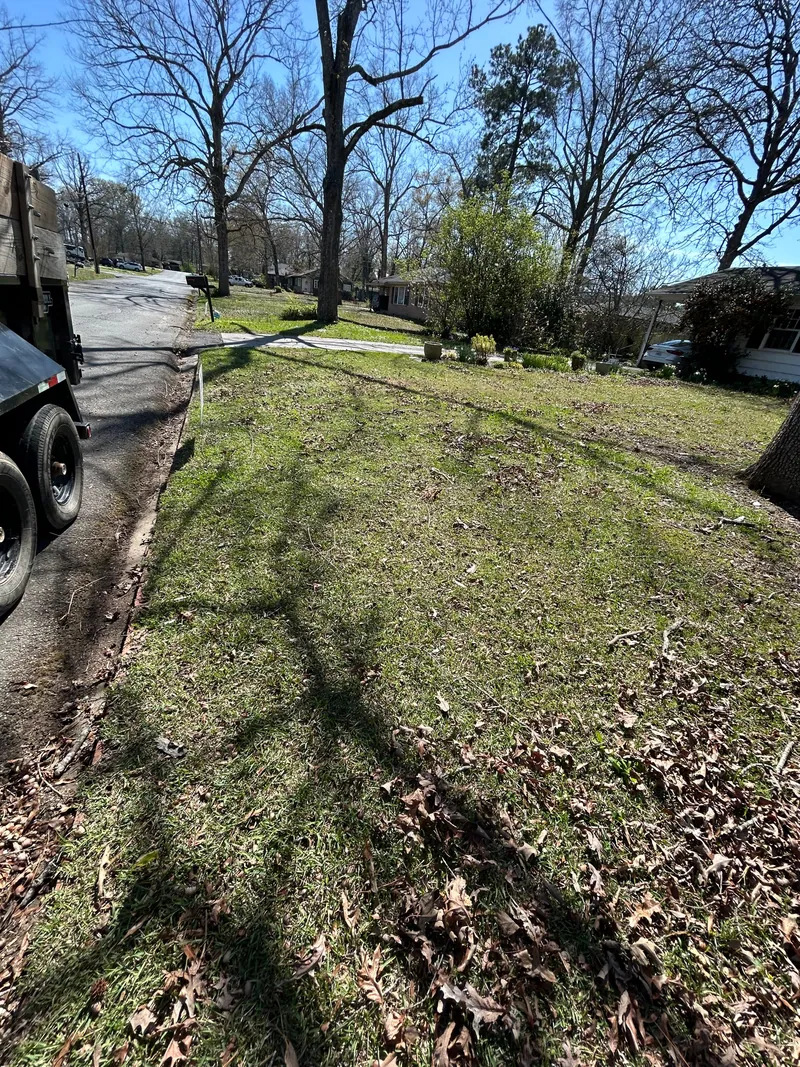
What this job is actually like
Storm work differs from ordinary yard cleanup in two ways. It's urgent, because the driveway is blocked or the fence is down and the dog is out. And it arrives mixed, because wind sorts nothing. One pile after a squall line will hold limbs, a section of privacy fence, shingles that came off somebody else's roof, a length of gutter and a fistful of insulation. That mix is the expensive part. Clean limbs are yard waste and get handled cheaply. Put siding, shingles and insulation through the same pile and none of it is yard waste any more, so the whole load gets handled as the expensive kind. Separating it while it's being loaded costs nothing. Separating it afterward means handling everything twice. Timing is the other half of storm work. The week after a storm is the week everybody calls, and the yards that get cleared first are the ones where somebody had already decided what they wanted done. A driveway, a gate and a path to the back door is a short visit. The whole property is a longer one. They don't have to happen on the same day.
Worth sorting out before the day
- Photograph it before anything moves if there's a claim coming. Once the yard is clear it can't be photographed.
- Keep the limbs in one pile and the building material in another, even roughly. Wind mixes everything, and separating it in the yard is far quicker than pulling it back apart off a trailer.
- Walk the fence line and the back of the property before you call. Panels blown into a pasture or down a creek bank are the part that gets missed, and they sit furthest from the truck.
- Tell us if the driveway is blocked. Getting a way in and out comes first, and that's often a short visit of its own before the rest of the yard gets touched.
How the job runs
Driveways and the way out come first. Limbs and yard material get loaded on their own and the fence panels, shingles and insulation go separately, because past the gate those two stop being the same kind of waste.
What moves the price
- how much of it is limbs and how much is building material
- how far across the property it landed
- access for a trailer, which a storm usually makes worse
- whether anything has to be cut down before it will load
Estimates are free, and you get the number before anything starts.
Common questions
Do you cut up what's still standing?
No. A leaning trunk or a limb hung up over a roof needs a tree crew. Once it's on the ground we clear it.
Why does mixing the fence in with the limbs cost more?
Because clean limbs are yard waste and a pile with siding, shingles and insulation through it isn't, and the two are handled a long way apart. One bay of a privacy fence in the middle of a brush pile is enough to turn the whole load into mixed construction waste. Nobody is enforcing that at your gate. It's simply what happens to the pile once it leaves, and it's why the separating gets done in the yard while there's room to do it.
Can't I just put it at the curb?
Sometimes, and it's worth checking what your own city or county collection will take before you stack it all at the road, because most of them draw a line somewhere on length, volume or who cut it. The bigger problem after a real storm is time. Curbside storm collection runs when it runs, and everybody in the neighborhood is in the same queue, so a limb pile and three fence panels can sit at the road for weeks in the meantime.
Where this is available
We cover storm debris removal across the whole service area, from Floyd County out to about fifty miles. How quickly we can get to you depends mostly on the distance, so the closer towns tend to be same-day or next-day and the far edge gets scheduled.
Floyd County, GA
Bartow County, GA
Polk County, GA
Chattooga County, GA
Gordon County, GA
Paulding County, GA
Cobb County, GA
Haralson County, GA
Walker County, GA
Catoosa County, GA
Cherokee County, GA
Carroll County, GA
Whitfield County, GA
Pickens County, GA
Murray County, GA
Douglas County, GA
Cherokee County, AL
Calhoun County, AL
DeKalb County, AL
Ready when you are
Tell us what you've got. You'll get a straight answer and a price.